
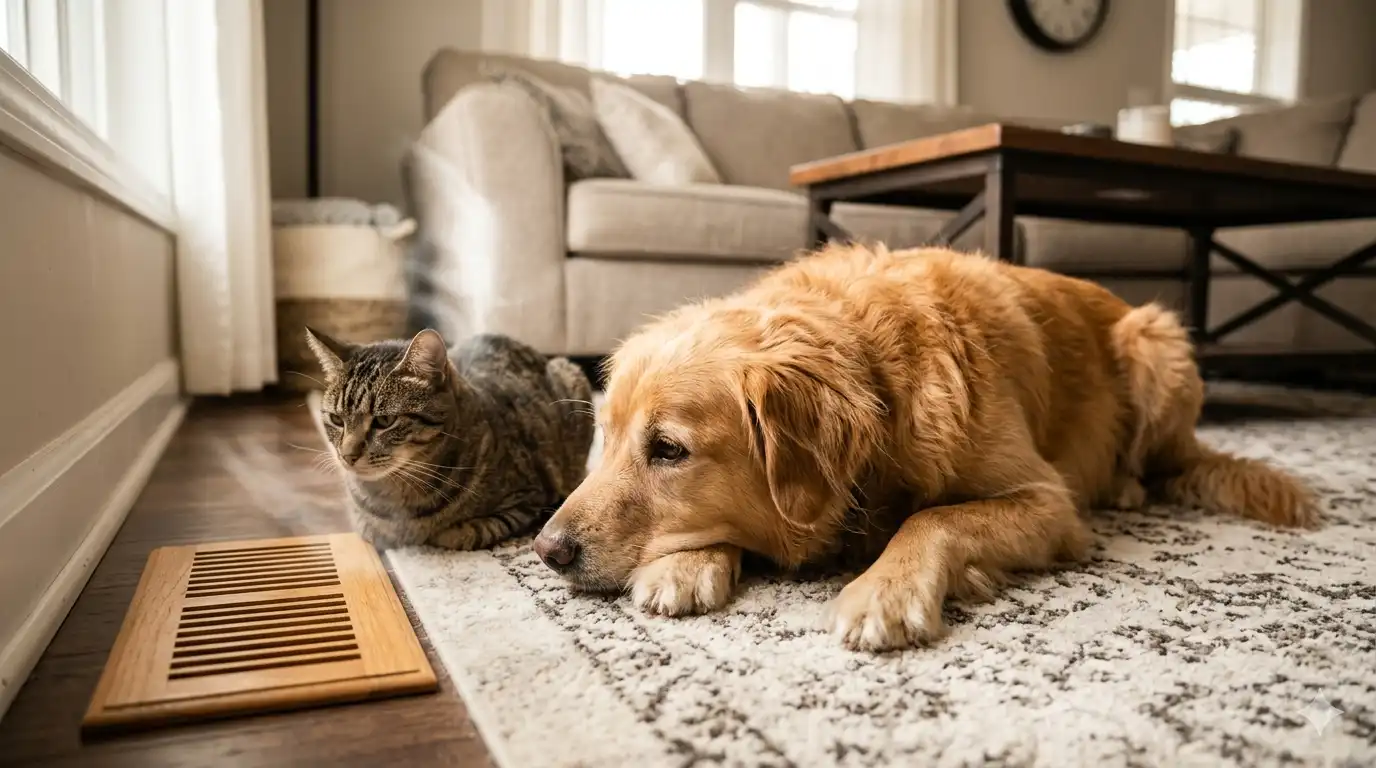
How Pets Impact Your HVAC System Performance (And What to Do About It)
Our pets give us companionship, comfort, and a whole lot of fur. What most pet owners don’t realize is that all that shedding, dander, and daily activity has a direct effect on one of the hardest-working systems in your home: your HVAC.
If your heating and cooling bills keep creeping up, your home feels stuffy, or your air filter looks like a felted sweater after a week, your furry family members may be part of the reason. The good news is that with a little awareness, a few easy habits, and professional guidance from Nation Heating, you can keep both your pets and your HVAC system happy.
Here’s exactly how pets affect HVAC performance—and what you can do about it.
1. Pet Hair and Dander Clog Your Air Filters
This is the biggest and most immediate impact. Every time your pet sheds, tiny hairs and flakes of dander become airborne and get pulled into your HVAC system’s return vents.
Your air filter is designed to catch this debris, but pets fill filters far faster than a pet-free home. A clogged filter forces your system to work harder to push air through, which means:
- Reduced airflow throughout your home
- Higher energy consumption and bigger utility bills
- More strain on the blower motor and other components
- A shorter lifespan for your equipment
What to do: In a home with pets, check your filter monthly and replace it every 30 to 60 days instead of the standard 90. Households with multiple pets or heavy shedders may need to swap it even more often.
2. Reduced Efficiency Means Higher Energy Bills
When airflow is restricted by pet debris, your system can’t reach your target temperature as easily. It runs longer cycles, consumes more electricity, and still struggles to keep your home comfortable.
Over a full heating or cooling season, this lost efficiency adds up to real money. A neglected, pet-clogged system can use noticeably more energy than one that’s properly maintained—all because of a filter that costs a few dollars to replace.
What to do: Treat filter changes as a routine pet-care task, right alongside feeding and grooming. A clean filter is one of the cheapest ways to protect your energy bill.
3. Pet Dander Lowers Your Indoor Air Quality
Dander—those microscopic skin flakes pets constantly shed—is a common allergen. When your HVAC system circulates air, it also circulates whatever dander isn’t trapped by the filter. For allergy sufferers, this can mean sneezing, congestion, itchy eyes, and poor sleep.
Standard fiberglass filters do little to capture fine dander. They protect the equipment but not necessarily your lungs.
What to do: Upgrade to a pleated filter with a MERV rating between 8 and 13. These capture far more dander and fine particles. If allergies are severe, consider adding a whole-home air purifier or running a standalone HEPA purifier in the rooms where your pets spend the most time.
4. Lingering Pet Odors Travel Through Your Ductwork
That “pet smell” doesn’t just hang in the air—it gets pulled into your ductwork and redistributed throughout the house. Hair, dander, and odor particles can settle inside ducts over time, creating a faint but persistent smell that air fresheners only mask.
What to do: Vacuum and clean regularly to reduce the source. If odors persist despite a clean home and fresh filters, it may be time for professional duct cleaning—generally worth considering every few years in a multi-pet household.
5. Outdoor Units Are a Target for Pets
Your outdoor condenser unit can take a beating from pets. Dogs sometimes mark the unit, and the corrosive nature of urine can damage the coils and fins over time. Curious pets may also chew on wiring, dig around the base, or knock debris into the unit.
What to do: Create a small barrier around your outdoor unit—a low fence or shrubs placed at least a couple of feet away to maintain airflow. Rinse the unit periodically and keep the area clear of fur, leaves, and debris.
6. Fur Builds Up on Vents, Coils, and Components
Even with good filters, fine pet hair finds its way deeper into the system. It can coat the evaporator coil, gather on the blower, and collect around vents and registers. Buildup on the coil acts like an insulating blanket, reducing the system’s ability to transfer heat and forcing it to work harder.
What to do: Dust and vacuum your supply and return vents regularly. Schedule a professional HVAC tune-up at least once a year (ideally twice for heavy-shedding homes) so a technician can clean the internal components you can’t easily reach.
Quick Checklist for Pet Owners
Keep your HVAC running smoothly with these simple habits:
- [ ] Check your air filter monthly and replace it every 30–60 days
- [ ] Use a pleated filter rated MERV 8–13 for better dander capture
- [ ] Groom and brush your pets regularly to cut down on loose fur
- [ ] Vacuum floors, furniture, and vents often
- [ ] Keep the area around your outdoor unit clean and protected
- [ ] Schedule professional HVAC maintenance once or twice a year
- [ ] Consider an air purifier if anyone in the home has allergies
The Bottom Line
Pets and HVAC systems can absolutely coexist—you just need to stay a step ahead of all that fur. The fixes are simple and inexpensive: change filters more often, groom your pets, keep things clean, and book regular tune-ups. Do that, and you’ll enjoy lower energy bills, cleaner air, and a comfortable home for every member of the family—two-legged and four-legged alike.
Your pets are worth a little extra maintenance. So is the system that keeps them cozy all year long.
Do you have a heavy shedder at home? Share your best fur-fighting tip in the comments below—and don’t forget to bookmark this guide for your next filter change.