
Learn How to Train Your GSD Here
Learn how to train your GSD with expert tips on obedience, socialization, and advanced skills. Effective, step-by-step guide for a well-behaved German Shepherd.
If you’re searching for how to train your GSD, you likely want effective, practical methods to teach your German Shepherd Dog obedience, good behavior, and specialized skills. German Shepherds are intelligent, loyal, and versatile, making them highly trainable with the right approach.
This guide provides a comprehensive, step-by-step plan to help you train your GSD at home, covering basic obedience, socialization, advanced commands, and addressing common behavioral challenges, ensuring your dog becomes a well-mannered companion.
Understanding Your German Shepherd’s Nature
Before diving into training, it’s essential to understand the unique traits of the German Shepherd breed. Known for their intelligence, strength, and work ethic, GSDs thrive on mental stimulation and physical activity. They are naturally protective, which makes them excellent guard dogs or service dogs, but without proper training, this instinct can lead to overprotectiveness or aggression. Their high energy levels require consistent exercise, and their eagerness to learn makes them responsive to positive reinforcement techniques. Recognizing these traits helps tailor your training to suit your GSD’s needs.
Setting Up for Training Success
Create a Consistent Routine
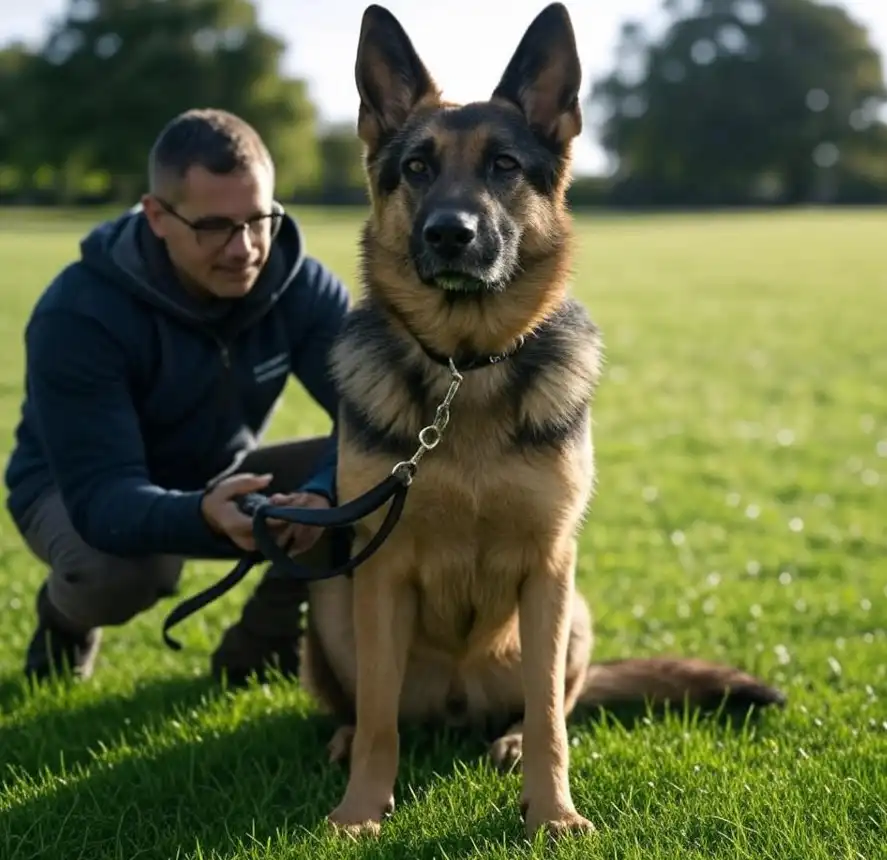
Establishing a daily routine is critical when you train your GSD. Consistency helps your dog understand expectations. Set specific times for feeding, walks, training sessions, and play. Short, frequent training sessions (10–15 minutes, 2–3 times daily) work best, as GSDs have sharp focus but can lose interest if sessions drag on.
Gather Essential Tools
To effectively train your GSD, equip yourself with the right tools:
- A sturdy leash and collar or harness for control during walks and training.
- High-value treats for rewards (small, soft, and tasty work best).
- A clicker for clicker training, which marks desired behaviors precisely.
- Toys like tug ropes or balls for play-based rewards.
- A comfortable crate for crate training, which aids in housebreaking and provides a safe space.
Choose a Training Environment
Start training in a quiet, distraction-free area like your home or backyard. As your GSD masters commands, gradually introduce distractions (e.g., other dogs, people, or noises) to proof their skills. This progression ensures your dog obeys commands in real-world scenarios, a key goal when you train your GSD.
Step-by-Step Guide to Train Your GSD
1. Socialization: Building Confidence
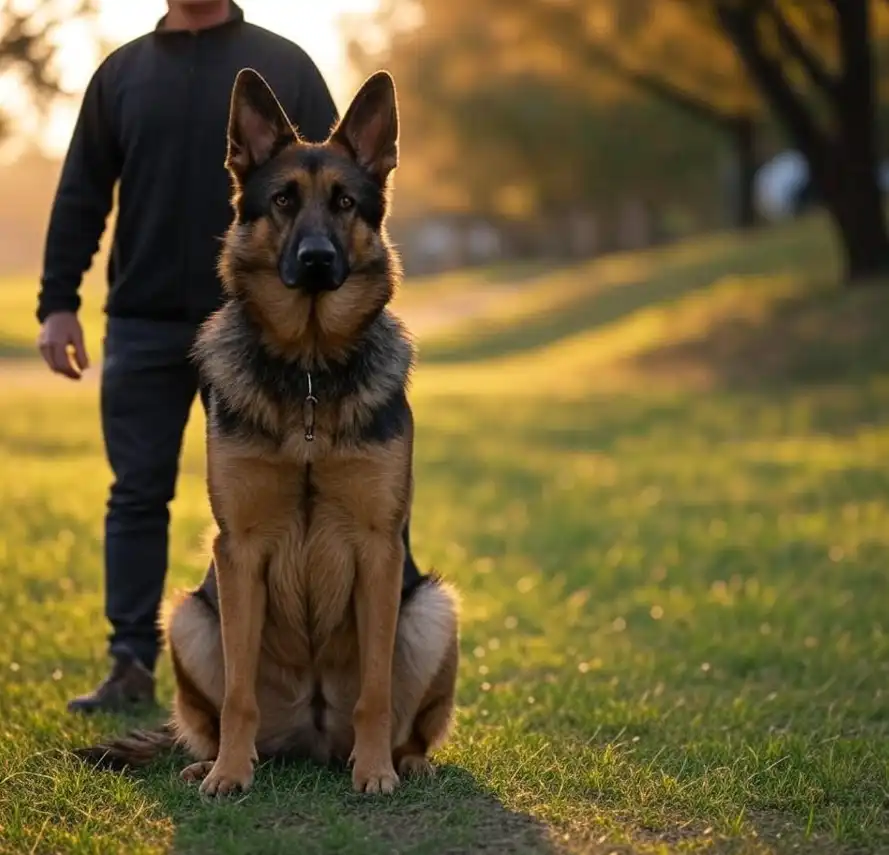
Socialization is crucial for GSDs, especially during their first 12–16 weeks. Expose your puppy to various people, animals, environments, and sounds in a positive way. For example:
- Take your GSD to dog-friendly parks or pet stores.
- Introduce them to different surfaces (grass, concrete, gravel) and noises (vacuums, car horns).
- Reward calm behavior with treats and praise.
Proper socialization prevents fear-based aggression and ensures your GSD is confident and well-adjusted. Continue socialization throughout their life to maintain these traits.
2. Basic Obedience Commands
Teaching basic obedience lays the foundation for a well-behaved GSD. Use positive reinforcement—rewarding good behavior with treats, praise, or play—to motivate your dog. Here are essential commands to train your GSD:
- Sit: Hold a treat above your dog’s nose, moving it back until they sit. Say “sit,” reward, and repeat.
- Stay: Ask your GSD to sit, then step back, saying “stay.” Reward them for holding position, gradually increasing distance and duration.
- Come: Use a long leash in a safe area. Say “come” in an excited tone, gently pulling the leash if needed, and reward when they reach you.
- Down: With your GSD sitting, lower a treat to the ground, saying “down.” Reward when they lie down.
- Leave It: Place a treat on the floor, cover it, and say “leave it.” Reward when they ignore it, progressing to uncovered treats.
Practice each command daily, keeping sessions fun and rewarding. Consistency is key to success when you train your GSD.
3. Housebreaking and Crate Training
Housebreaking is a priority for GSD puppies. Use crate training to create a den-like space where your dog feels secure. Follow these steps:
- Take your puppy outside after meals, naps, and playtime, praising them for eliminating outdoors.
- Watch for signs like sniffing or circling, and immediately take them out.
- Use a consistent cue like “go potty” to associate with the action.
- Never punish accidents; instead, clean thoroughly to remove odors.
A crate helps prevent accidents when unsupervised and teaches your GSD to hold their bladder. Gradually increase crate time, ensuring it’s a positive experience with treats and toys.
4. Addressing Common Behavioral Issues
GSDs may develop behaviors like excessive barking, chewing, or jumping. To train your GSD effectively, address these early:
- Barking: Identify triggers (e.g., strangers, boredom). Teach “quiet” by rewarding silence after a bark. Provide mental stimulation like puzzle toys to reduce boredom.
- Chewing: Supply appropriate chew toys and redirect chewing to them. Supervise and crate when necessary to prevent damage.
- Jumping: Ignore jumping and reward four-paws-on-the-floor behavior. Teach “off” by turning away and rewarding calm greetings.
Consistency and redirection are vital to correct these behaviors while maintaining a positive training environment.
5. Advanced Training for GSDs
Once your GSD masters basic commands, challenge their intelligence with advanced training. German Shepherds excel in roles like search and rescue, agility, or protection work. Try these:
- Heel: Teach your GSD to walk beside you without pulling, using treats to lure them into position.
- Fetch: Use a ball or frisbee to teach retrieval, rewarding when they bring it back.
- Scent Work: Hide treats or toys, encouraging your GSD to find them using their nose.
These activities keep your GSD mentally and physically engaged, strengthening your bond and enhancing their skills.
Exercise and Mental Stimulation
GSDs require at least 1–2 hours of daily exercise to stay healthy and prevent destructive behavior. Combine physical activities like running, hiking, or swimming with mental challenges like obedience drills or training games. A tired GSD is a well-behaved GSD, so prioritize activities that burn energy and stimulate their mind.
Common Mistakes to Avoid
When you train your GSD, steer clear of these pitfalls:
- Inconsistency: Mixed signals confuse your dog. Use the same cues and rules every time.
- Punishment-Based Training: Harsh corrections can damage trust and increase fear. Stick to positive reinforcement.
- Skipping Socialization: Neglecting early exposure leads to behavioral issues later.
- Insufficient Exercise: A bored GSD may become destructive or anxious.
Patience and persistence are essential for success. Training takes time, but the results are worth it.
Building a Strong Bond
Training isn’t just about commands—it’s about building trust and communication with your GSD. Spend quality time together through play, grooming, or relaxed walks. A strong bond makes your GSD more responsive and eager to please, enhancing your training efforts.
Conclusion
To train your GSD effectively, focus on consistency, positive reinforcement, and understanding your dog’s unique needs. Start with socialization and basic obedience, progress to advanced skills, and address behavioral challenges promptly. Provide ample exercise and mental stimulation to keep your GSD happy and engaged. With dedication, you’ll transform your German Shepherd into a loyal, well-mannered companion ready for any challenge.
- Train Your GSD
- gsd training commands
- gsd training videos
- gsd training techniques
- gsd training tips
- gsd enterprise
- german shepherd training video
- german shepherd training commands
- how to train a german shepherd to be a guard dog
Frequently Asked Questions About Training Your GSD
Discover expert answers to common queries about training your German Shepherd (GSD) for obedience and behavior.
How long does it take to train a GSD?
Training a GSD typically takes 4-6 months for basic obedience, depending on consistency and the dog’s age. Start early with short sessions for best results, enhancing your GSD training journey.
What are the best training methods for a GSD?
Use positive reinforcement with treats and praise for effective GSD training. Consistency and short sessions suit their intelligent nature, ensuring a well-behaved companion.
Can I train my GSD at home?
Yes, train your GSD at home with a quiet space, treats, and a routine. Start with basic commands like sit and stay for a successful home training experience.
How often should I train my GSD?
Train your GSD 2-3 times daily for 10-15 minutes. Regular sessions boost obedience and keep your GSD mentally stimulated and engaged.
What if my GSD doesn’t respond to training?
If your GSD resists, check for distractions or fatigue. Use high-value treats and vary techniques to improve responsiveness in GSD training efforts.
How do I socialize my GSD puppy?
Socialize your GSD puppy by exposing them to people, dogs, and environments early. Use positive reinforcement to build a confident, well-socialized GSD.
Can GSDs be trained for protection?
Yes, GSDs excel in protection training due to their loyalty. Start with obedience, then advance with professional guidance for effective GSD guard training.
What tools do I need to train my GSD?
Use a leash, collar, treats, and a clicker to train your GSD. These tools enhance control and reward-based training for a disciplined dog.
How much exercise does a GSD need during training?
GSDs need 1-2 hours of exercise daily during training. Combine walks and play to support their energy and improve GSD obedience outcomes.
What if my GSD shows aggression during training?
Address GSD aggression with calm redirection and professional help if needed. Early socialization prevents issues, ensuring a safe training process.
About the Author