
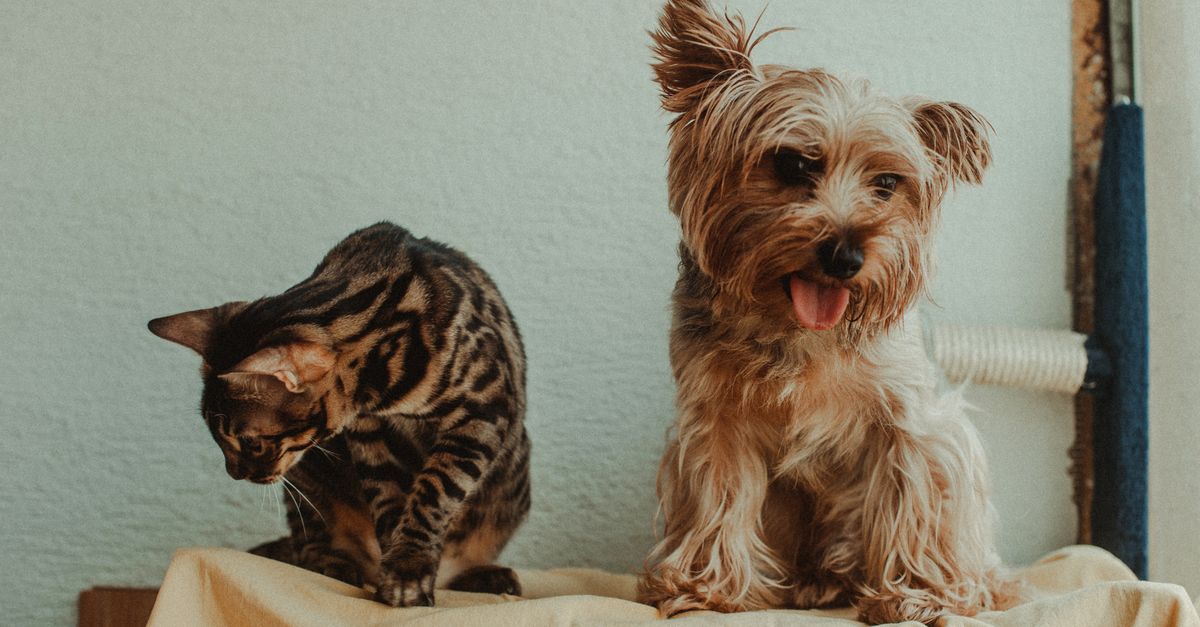
How to Read Your Pet’s Body Language at Home
Your dog flattens his ears the moment a stranger crouches down to pet him. You assume he’s being shy. But those pinned ears, combined with a tucked tail and a body leaning slightly backward, are actually telling you something more urgent: he’s scared, and the situation could go sideways fast. Understanding pet body language isn’t just an interesting hobby—it’s one of the most practical skills you can develop as a pet owner.
Most of us learn to read our pets through trial and error over years. But there are patterns that show up consistently across species, and once you know what to look for, you’ll catch stress, pain, and even early illness long before things escalate. It changes how you interact with your animals every single day.
This isn’t about memorizing a chart. It’s about training your eye to notice small shifts in posture, facial expression, and movement—and knowing what to do with that information.
What Your Dog’s Posture Is Actually Saying
The “loose and wiggly” baseline
A relaxed dog moves loosely. His weight is distributed evenly, his mouth is slightly open, his tail wags in a wide, sweeping arc that involves his whole back end. That’s your baseline. Everything else is a deviation from it. When your dog stiffens—even subtly, even for a second—pay attention. A hard, still body with a high, slow tail wag is not a happy dog. Counterintuitively, a stiff tail wagging in short, fast movements signals high arousal or tension, not friendliness.
Stress signals most owners miss
Yawning when he’s not tired, licking his lips when there’s no food around, suddenly sniffing the ground in the middle of an interaction—these are all calming signals. Your dog is trying to de-escalate a situation that’s making him uncomfortable. You’ll see them at the vet, during loud family gatherings, and sometimes just when you’re staring at him too intently. If you notice these during walks, your dog may be more overwhelmed than you realize. That connects directly to what happens when you leave the house, too—if you’ve ever dealt with dog separation anxiety, you’ll recognize that many of the same stress signals appear in the lead-up to your departure.
Decoding Cat Body Language Room by Room
The tail tells everything
A cat walking toward you with her tail straight up, tip slightly curved, is genuinely happy to see you. That’s a greeting. A tail puffed to twice its normal size means she’s frightened or highly agitated—the fur stands on end to make her look larger. A low, lashing tail isn’t playfulness; it’s irritation, and it usually means stop touching me right now. Many cat scratches happen because owners misread that tail flick as an invitation to keep petting.
The slow blink and what it means
If your cat makes eye contact and slowly closes and opens her eyes, she’s expressing comfort and trust. You can return it. Make soft eye contact, then slowly blink. Many cats will blink back. It’s a genuine form of communication, not anthropomorphism. Conversely, a hard, unblinking stare is a challenge or a sign of anxiety. If a cat in your home is doing a lot of wide-eyed, dilated staring without obvious cause, it’s worth checking whether something in her environment has changed—including the litter box area, since stress and litter box avoidance often go hand in hand.
Ear position matters enormously too. Ears forward and slightly outward: curious and relaxed. Ears rotated back or flattened: annoyed or frightened. If you’re petting a cat and her ears start swiveling back, stop before she swats.
Reading Pain in Pets Before It Becomes Obvious
Animals instinctively hide pain—it’s a survival mechanism—so by the time a pet is visibly limping or crying, they’ve often been uncomfortable for a while. The earlier signals are behavioral. A dog who suddenly snaps when you touch his lower back, a cat who stops jumping onto surfaces she used to love, a rabbit who sits hunched with half-closed eyes—these are pain postures. In dogs, watch for the “prayer stretch,” where the front end goes down while the back end stays up. It often signals abdominal discomfort.
Changes in grooming are another reliable indicator. A cat who stops grooming herself, or a dog who obsessively licks one spot on his leg, is telling you something is wrong in that area. Overgrooming in cats can also signal anxiety rather than physical pain—understanding which is which requires looking at the whole picture, including recent changes in routine or environment. If you’re already keeping up with at-home grooming, you’ll have a much easier time spotting these changes early because you’ll know your pet’s normal.
Small Pet Body Language: Guinea Pigs, Rabbits, and Hamsters
Small pets communicate just as clearly as dogs and cats—owners just tend to watch them less closely. A guinea pig who “popcorns”—randomly leaping and twisting in the air—is expressing pure joy. A guinea pig sitting hunched in a corner, not reacting to food or sound, is unwell until proven otherwise. Teeth chattering is a warning; rumblestrutting (a low vibration while swaying) is a dominance display between cage-mates.
Rabbits thump their back feet to signal alarm. A rabbit who binkies—leaping and twisting mid-air, similar to guinea pig popcorning—is relaxed and happy. Flat ears pressed against the back of the skull mean fear or aggression, not relaxation (relaxed rabbit ears lie gently back, not plastered down). If you keep a hamster, watch for excessive bar-chewing or repetitive pacing, which signals stress and under-stimulation—often a cage-size problem. Good bedding and nesting material go a long way toward reducing that anxiety, and if you’re still sorting out your hamster’s setup, choosing the right hamster bed matters more than most owners expect.
When Body Language Points to Something Bigger
Sometimes what looks like a behavioral signal is actually a symptom. A dog who suddenly becomes clingy and trembles at night might be developing cognitive dysfunction. A cat who starts hiding more than usual could have hyperthyroidism or kidney disease—both common in older cats. A rabbit who stops eating and sits still is a medical emergency, not a mood. The rule of thumb: any sudden, unexplained shift in your pet’s normal behavior or posture that lasts more than 24 to 48 hours warrants a vet call.
Keeping vet bills manageable makes it easier to act quickly on these signals rather than waiting to see if things improve. If you’re navigating the cost side of that equation, it’s worth understanding your options—the challenge of vet costs is real, and planning ahead helps. Pets who are chronically under-stimulated also show behavioral changes that can look like illness, so ruling that out first is always worthwhile.
Frequently Asked Questions
How do I know if my dog is stressed versus just tired?
A tired dog relaxes fully—loose muscles, soft eyes, easy breathing. A stressed dog may lie down but hold tension in his body: jaw tight, eyes scanning, unable to fully settle. You might also see stress yawning, lip licking, or sudden shedding (yes, dogs shed more under acute stress). If your dog can’t seem to switch off even after exercise, stress is the more likely cause.
My cat purrs but also seems uncomfortable. Is purring always a good sign?
No. Cats purr when content, but also when anxious, in pain, or even dying. It’s a self-soothing mechanism. If your cat is purring but her body is tense, she’s crouching low, or she’s not eating, the purring is telling you she’s trying to comfort herself—not that everything is fine. Combine purring with posture and context before drawing conclusions.
Can small pets like guinea pigs actually bond with their owners?
Absolutely. Guinea pigs who are comfortable with their owners will approach the side of the enclosure when you enter the room, vocalize with soft wheeks, and sit relaxed in your hands rather than freezing. That relaxed, floppy body in your lap is a genuine trust signal—it takes time to earn and it’s worth paying attention to. Handling them consistently and gently from a young age makes a significant difference.
The more fluent you become in pet body language, the earlier you catch problems—and the stronger your relationship with your animal becomes. You stop guessing and start having an actual conversation. That’s not a small thing.