
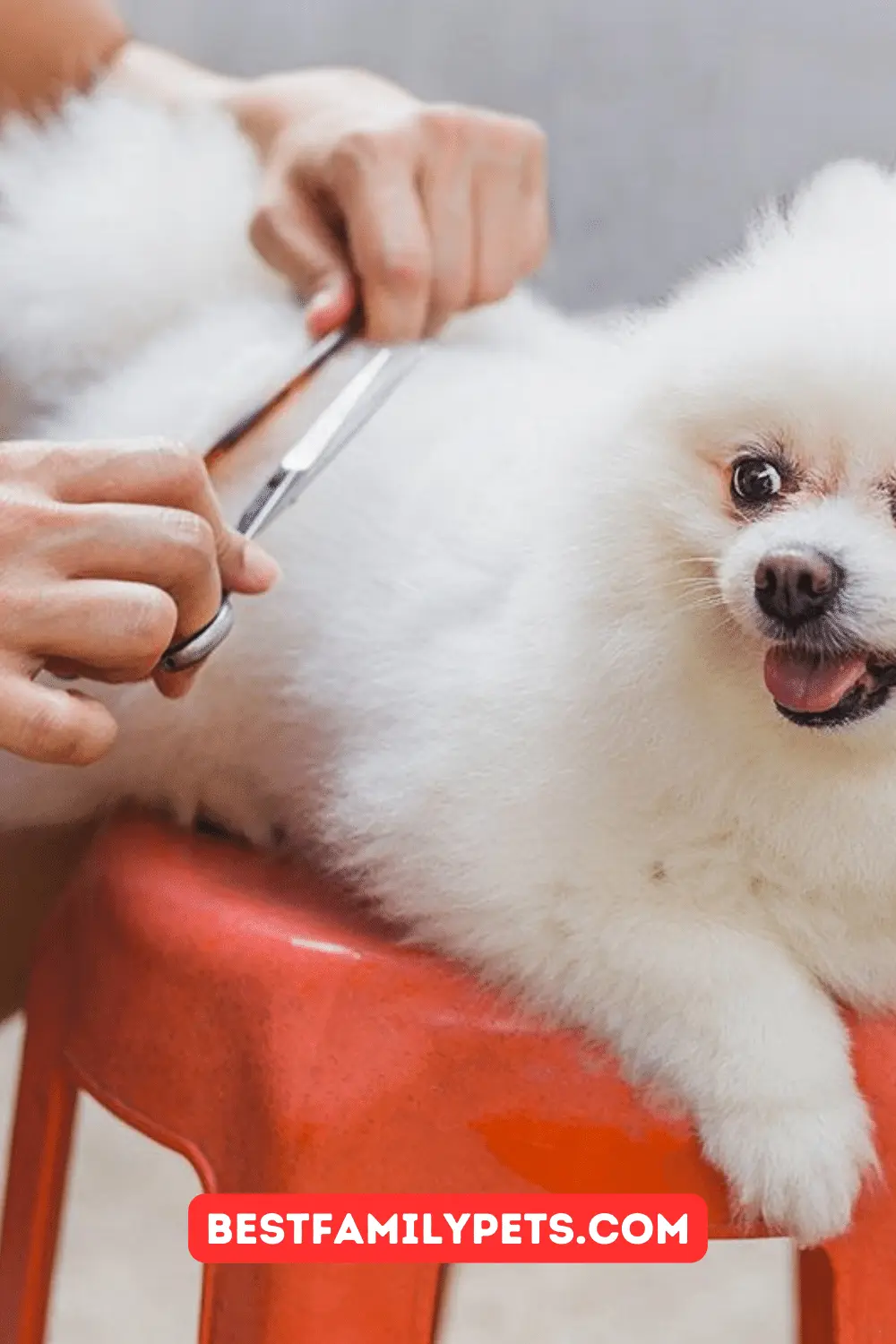
The Best Shears For Grooming Your Dog
The best dog grooming shears are essential tools—typically straight, curved, thinning, and chunkers—that professionals and home groomers use to shape, blend, and finish a dog’s coat, with choices varying based on the pet’s coat type, the desired style, and the groomer’s comfort. Selecting the right set, made from quality materials like Japanese stainless steel and featuring ergonomic handles, ensures a smooth cut, prevents hand fatigue, and results in a beautiful, professional finish for your canine companion.
We recommend that when you choose the best shears for grooming your dog, you choose a professional pet grooming set that is five stars. You will pay a bit more for the quality, but it will work better for you in the long run as you won’t get a set that will break down or hurt your dog.
The Four Essential Types of Grooming Shears
To achieve a full range of grooming styles, from crisp show cuts to soft, natural blends, you need a diverse set of specialized shears. Using the right shear for the right job is the secret to a professional-quality finish.
1. Straight Shears
- Purpose: These are the versatile workhorse of any grooming kit. Used for general trimming, cutting length, and creating the foundation of the cut.
- When to Use: Ideal for establishing clean, precise lines on the body, legs, and tail, or for squaring off the head on certain breeds.
- Size Tip: Longer blades (8″ or more) offer speed and coverage for large breeds, while shorter blades (6.5″ or less) provide precision for smaller dogs and delicate areas like the feet.
2. Curved Shears
- Purpose: Designed to follow the natural contours of the dog’s body.
- When to Use: Essential for shaping rounded areas—think the topknot on a Poodle, the profile of a teddy bear face, or the perfect curve over the hip and legs. They allow for a smoother, more natural-looking curve than straight shears.
- Design Note: The degree of curve can vary; a tighter curve is best for small areas, and a gentler curve for larger body sections.
3. Thinning Shears (Blenders)
- Purpose: These shears have a cutting blade on one side and a toothed blade on the other, designed to remove a small, controlled amount of hair.
- When to Use: Perfect for blending lines where different lengths meet (like where a clipper cut meets a scissored area), softening harsh edges, and creating a smooth, natural finish. They also help to reduce minor bulk without taking away length.
4. Chunkers (Texturizers)
- Purpose: A more aggressive type of thinning shear with fewer, wider-spaced teeth, allowing them to remove significantly more bulk in fewer cuts.
- When to Use: Ideal for quickly removing large amounts of volume from thick or double coats (like Doodles, Samoyeds, or heavily furnished breeds) while still leaving a textured, natural appearance that avoids chop marks. They speed up the bulk-reduction process on heavy coats.
How to Choose the Right Shear for Your Dog
The “best” shears aren’t one-size-fits-all. Your ideal selection depends entirely on your dog’s specific coat and the type of cuts you plan to perform.
| Dog Coat Type | Common Shears Needed | Why They Work Best |
| Poodle, Bichon, Curly | Straight, Curved, Thinning/Chunker | Curved shears are key for sculpting the signature rounded shape; chunkers are great for reducing the dense, springy coat bulk. |
| Shih Tzu, Maltese, Long/Silky | Straight, Safety-Tip Detailer | Straight shears create clean lines; a fine-toothed thinning shear can lightly soften edges. Micro-serrated blades help grip slippery coat. |
| Golden Retriever, Terrier (Furnishings) | Thinning/Blending, Straight | Blenders are crucial for softening the transition where the body meets the long furnishings on legs and tail for a natural, soft finish. |
| Thick, Double Coats | Chunker, Heavy-Duty Straight | Chunkers are vital for taking off heavy bulk quickly and efficiently without making the coat look choppy. |
Key Factors for Quality and Comfort
Beyond the type of shear, the construction and design play a huge role in the effectiveness and your comfort during long grooming sessions.
- Blade Material: Look for high-quality Japanese 440C or VG-10 stainless steel. This material is hard, which allows the blade to take and hold a razor-sharp edge (like a convex edge) for a clean, effortless cut.
- Ergonomics: For professionals or anyone grooming for extended periods, an ergonomic handle is critical to prevent hand and wrist fatigue.
- Offset/Crane Handle: The thumb ring is positioned lower, aligning your hand, wrist, and shoulder in a more natural, comfortable cutting position.
- Swivel Thumb: Allows the thumb ring to rotate, giving you greater flexibility to cut at different angles without twisting your wrist.
- Tension System: A reliable, adjustable tension screw allows you to fine-tune the tightness between the blades. Proper tension prevents the shears from chewing or folding the hair, ensuring a smooth, crisp cut tailored to the coat’s thickness.
- Safety Features: For sensitive areas like the face, paws, and sanitary regions, always use a pair of safety-tip shears (also called bullnose) with rounded, blunt ends to minimize the risk of accidental nicks or pokes.
About the Author